
The Top 10 Benefits Of Eating Ripe Bananas
The benefits of eating ripe bananas go far beyond their naturally sweet flavour and soft texture. These nutritious fruits provide potassium, vitamin B6, dietary fibre, and other valuable nutrients that support everyday health.
As bananas ripen, their starches gradually turn into sugars, making them sweeter and easier to incorporate into various dishes. Their convenient size and natural packaging also make them a popular choice for busy mornings and healthy snacks.
Whether you enjoy ripe bananas with your breakfast, blend them into creamy smoothies, or use them in delicious vegan recipes, there are countless ways to appreciate this versatile fruit.
This article will explore the health benefits of ripe bananas, their nutritional value, practical storage tips, and creative ways to enjoy them as part of a balanced vegan lifestyle.
History Of The Banana
Bananas have a fascinating history stretching back thousands of years. Researchers believe they were first domesticated in Southeast Asia and nearby regions, where early communities cultivated wild banana plants for food.
Over time, trade and migration spread banana cultivation to India, Africa, and other tropical regions. Their long history in Asian food traditions also reflects the importance of plant-based ingredients in Asian cuisine.
Today, bananas grow in many tropical and subtropical countries. They are an important food crop in places such as India, the Philippines, Ecuador, and Bangladesh.
These countries also have rich culinary traditions. Explore our 30-minute vegan Filipino recipes and 30-minute vegan Bangladeshi recipes for delicious plant-based meals inspired by their local cuisines.
Modern cultivated bananas differ from wild varieties because they generally contain fewer hard seeds and are easier to eat. Centuries of development have helped make bananas one of the world’s most familiar fruits.
Bananas have also become an essential part of everyday diets worldwide. Their natural sweetness, protective peel, and year-round availability make them a convenient choice for people of different ages.
Bananas are now enjoyed worldwide, but their tropical origins make them equally fascinating to gardeners. If you enjoy growing your own fruit, our guide to growing banana trees in containers explores how to cultivate these beautiful tropical plants at home.
From traditional dishes to modern smoothies and baked goods, bananas remain an important part of global food culture. They are especially versatile in plant-based cooking, as demonstrated by these delicious vegan banana recipes.
Nutrition Facts Of Bananas (1 Medium Ripe Banana, 118 g)
- Calories: 105 kcal
- Carbohydrates: 27 g
- Sugar: 14.4 g
- Fibre: 3.1 g
- Protein: 1.3 g
- Fat: 0.4 g
- Potassium: 422 mg
- Vitamin B6: 0.43 mg
- Vitamin C: 10.3 mg
- Magnesium: 32 mg
- Sodium: 1.2 mg
Source: USDA FoodData Central. Nutritional values are approximate and may vary depending on banana size and ripeness.
Benefits Of Eating Ripe Bananas
The benefits of eating ripe bananas go far beyond their delicious sweetness and convenience. These nutritious fruits provide natural carbohydrates, dietary fibre, essential vitamins, and minerals that support several important functions throughout the body.
From maintaining energy levels to supporting digestion, muscle function, and heart health, ripe bananas can be a valuable addition to a balanced vegan diet. Let’s explore how this familiar fruit contributes to everyday health and well-being.
1. Provides Natural Energy For Everyday Activities
Ripe bananas provide convenient energy to help fuel your daily activities. According to USDA FoodData Central, one medium banana (about 118 grams) contains approximately 105 calories and 27 grams of carbohydrates. These carbohydrates supply energy for your brain, muscles, and other body functions.
As bananas ripen, some of their starch converts into sugar, giving the fruit its familiar sweetness. This makes ripe bananas a convenient snack before a walk or during a busy morning. They also fit beautifully into a selection of healthy vegan snacks for busy days.
For a more satisfying option, pair a banana with unsweetened plant-based yogurt, nuts, or peanut butter. These additions provide protein or healthy fats alongside carbohydrates. You can also blend bananas into delicious vegan protein smoothies for a nourishing breakfast or post-activity snack.
Bananas offer a simple way to enjoy naturally sweet food without relying on heavily processed alternatives. Their convenience makes them especially appealing when you need a quick energy boost.
2. Supports Healthy Digestion
One valuable benefit of eating ripe bananas is their contribution to daily fibre intake. A medium-sized banana provides approximately 3.1 grams of dietary fibre, according to USDA nutrition information. Fibre supports normal bowel function and helps maintain digestive regularity.
Ripe bananas also contain pectin, a soluble fibre that can influence stool consistency. However, individual responses vary, so bananas may feel comfortable for some people while causing bloating in others. Their effects depend partly on ripeness, portion size, and individual digestive sensitivity.
According to the National Institute of Diabetes and Digestive and Kidney Diseases, adults generally need around 22–34 grams of fibre daily, depending on age and sex. A banana can contribute to this target alongside oats, vegetables, beans, and other fruits.
Including a variety of fibre-rich plant foods is an important part of maintaining a healthy vegan diet. Drinking enough water also helps fibre work effectively, supporting comfortable digestion and regular bowel movements.
3. Helps Maintain Normal Blood Pressure
Potassium is an essential mineral that supports fluid balance, nerve signalling, and normal blood pressure regulation. One medium banana provides approximately 422 milligrams of potassium, making it a useful addition to a balanced eating pattern.
The National Institutes of Health explains that adequate potassium intake can help support healthy blood pressure, partly by promoting sodium excretion. Potassium also plays an important role in maintaining normal fluid balance throughout the body.
Research on the DASH eating pattern demonstrates the value of combining potassium-rich foods with vegetables, fruits, whole grains, and other nutritious choices. Bananas can contribute to this approach, but eating them alone will not prevent or treat hypertension.
Enjoy bananas alongside beans, leafy greens, potatoes, and whole grains for greater dietary variety. Our guide to healthy vegan eating provides additional ideas for building balanced plant-based meals.
People with kidney disease or prescribed potassium restrictions should consult their healthcare professional about appropriate portions. This is particularly important when potassium intake needs to be carefully monitored.
4. Supports Normal Muscle And Nerve Function
Your muscles and nerves rely on essential minerals to transmit signals and coordinate movement. Ripe bananas provide potassium, with approximately 422 milligrams in one medium fruit, along with smaller amounts of magnesium.
Potassium helps regulate electrical activity involved in muscle contractions and nerve communication. Magnesium supports normal muscle function and energy metabolism, making both minerals important for everyday physical activity.
Bananas provide useful nutrients and make a convenient snack throughout the day. Eating one after physical activity also supplies carbohydrates that help replenish the body’s energy stores. Combining bananas with other muscle-building vegan foods can help create balanced, nutrient-rich meals.
However, muscle cramps have several possible causes, including strenuous exercise, dehydration, and certain medical conditions. Eating a banana is not a guaranteed remedy.
Regular meals, adequate hydration, and appropriate recovery habits remain important for maintaining normal muscle function. Gentle movement, including stress-relief exercises, can also support everyday physical and emotional well-being.
5. Contributes To Heart Health
A heart-friendly diet includes foods that provide fibre, potassium, and other nutrients while keeping overall sodium intake in balance. Ripe bananas fit this pattern because one medium fruit supplies approximately 422 milligrams of potassium, around 3.1 grams of fibre, and very little sodium.
Potassium helps regulate blood pressure, an important factor in cardiovascular health. Harvard’s Nutrition Source identifies bananas as a potassium-rich fruit that can complement healthy eating patterns such as the DASH diet.
For a balanced breakfast, combine banana slices with oats, unsweetened plant-based yogurt, and a small serving of nuts or seeds. This provides a broader mix of nutrients than relying on one food alone. Our collection of plant-based breakfast recipes offers more delicious ways to start your day.
Including bananas in a balanced diet rich in vegetables, legumes, whole grains, and other fruits can support cardiovascular health. Small, consistent dietary choices can contribute to long-term well-being without relying on any single food for protection.

6. Supports Healthy Brain Function
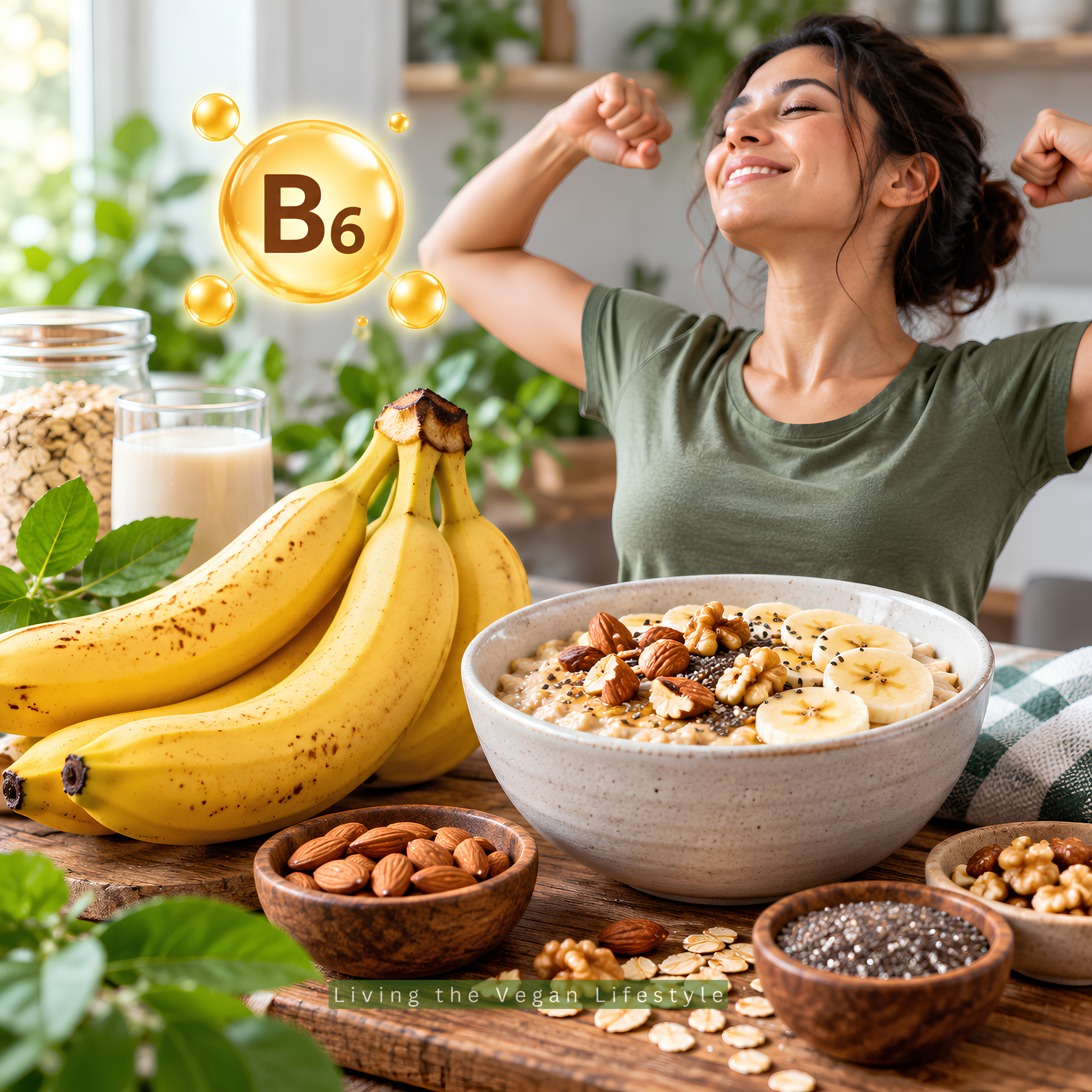
Ripe bananas provide vitamin B6, which supports several processes involved in normal brain and nervous system function. A medium banana contains approximately 0.43 milligrams of vitamin B6, making it a useful dietary source of this essential nutrient.
The National Institutes of Health states that adults aged 19 to 50 typically need 1.3 milligrams of vitamin B6 daily. This vitamin also participates in protein metabolism and the production of neurotransmitters involved in nerve communication.
Eating bananas alongside whole grains, vegetables, nuts, seeds, and suitable protein sources can contribute to a varied nutrient intake. Understanding the role of other essential nutrients, including vitamin B12 in vegan diets, is also important for maintaining normal nervous system function.
However, bananas are not a treatment for memory loss or neurological conditions. Brain health depends on many factors, including sleep, physical activity, and overall nutrition. A balanced diet offers broader support than relying on any single fruit.
7. Provides Antioxidants For Everyday Health
Ripe bananas contain naturally occurring plant compounds, including dopamine and phenolic compounds, that contribute to their antioxidant profile.
Antioxidants help protect cells against oxidative damage as part of the body’s natural defence mechanisms. Understanding how to reduce oxidative stress can also encourage healthier everyday habits.
However, the presence of antioxidants in a food does not automatically mean that eating it prevents a particular disease. Banana composition also changes during ripening, so the amounts of individual compounds can vary depending on the variety and maturity.
A medium banana provides approximately 10.3 milligrams of vitamin C, according to USDA-based nutrition data. Other nutrients, including vitamin E, also contribute to antioxidant protection, making dietary variety especially valuable.
Enjoy ripe bananas alongside berries, citrus fruits, guava, and other colourful produce to obtain a wider range of beneficial plant compounds. Our guide to vegan vitamin A also explores another essential nutrient found in many colourful plant foods.
Including different fruits and vegetables makes your diet more nutritionally diverse and supports a balanced approach to everyday health. Rather than depending on one antioxidant-rich food, aim for a colourful variety throughout the week.
8. Offers A Convenient Option For Weight Management
Ripe bananas can fit comfortably into a weight-management plan because they provide useful nutrients in a convenient portion. One medium banana contains approximately 105 calories and 3.1 grams of fibre, making it an easy addition to breakfast or a snack.
Their natural sweetness can also add flavour to oatmeal, smoothies, and homemade pancakes without requiring additional sugar. Including bananas in a balanced vegan nutrition plan for weight management can help provide variety while supporting individual dietary goals.
A large observational study of 133,468 American adults examined the relationship between fruit and vegetable intake and weight changes over up to 24 years. Bananas were among the fruits associated with less weight gain over time.
However, this observational finding does not prove that eating bananas causes weight loss. Overall food choices, portion sizes, physical activity, and other lifestyle factors influence long-term weight management.
For a balanced approach, enjoy bananas alongside vegetables, whole grains, and plant-based protein foods. Sustainable weight management depends on your overall eating pattern, activity, sleep, and individual health needs.
9. Supports Normal Immune Function
Ripe bananas contribute nutrients that help the body maintain normal immune function. These include vitamin B6, which participates in immune-system activity, and vitamin C, which supports normal immune responses and helps protect cells from oxidative damage.
A medium banana provides approximately 0.43 milligrams of vitamin B6 and 10.3 milligrams of vitamin C. The National Institutes of Health explains that vitamin B6 participates in more than 100 enzymatic reactions, including processes involved in metabolism and immune function.
However, bananas supply only part of the nutrients your immune system needs. A varied diet containing vegetables, legumes, whole grains, nuts, seeds, and appropriate protein sources provides broader nutritional support.
Other essential nutrients, including zinc from vegan food sources, also contribute to normal immune function. Our Nature article on supporting your immune system naturally explores additional everyday wellness habits.
Bananas can be part of a balanced diet that supports normal immune function, but they cannot prevent or cure infections on their own. Consistent nutrition, sufficient sleep, and healthy lifestyle habits remain important.
10. Provides Vitamin B6 For Energy Metabolism
Vitamin B6 helps the body metabolize nutrients and carry out essential metabolic processes. According to the National Institutes of Health, this vitamin participates in more than 100 enzyme reactions, including those involved in protein, carbohydrate, and fat metabolism.
A medium banana provides approximately 0.43 milligrams of vitamin B6, contributing to the recommended daily intake of 1.3 milligrams for adults aged 19 to 50. This makes bananas a convenient way to obtain some of this essential vitamin through everyday foods.
Unlike carbohydrates, vitamin B6 does not provide calories directly. Instead, it helps enzymes carry out processes that allow the body to use nutrients effectively. Maintaining a varied diet helps ensure adequate intake of B6 and other essential vitamins.
For a nourishing breakfast, add sliced ripe banana to oatmeal and top it with nuts or seeds. This combination provides carbohydrates, fibre, and additional nutrients, making it a satisfying way to start the day.
Including other vitamin B6 sources, such as potatoes, legumes, and fortified cereals, can help create a more balanced diet. Our collection of plant-based breakfast recipes offers more inspiration for nutritious morning meals.
For satisfying lunch and dinner ideas, explore our ultimate guide to vegan protein meals, featuring a variety of delicious plant-based dishes.
How Do You Keep Bananas Fresh?
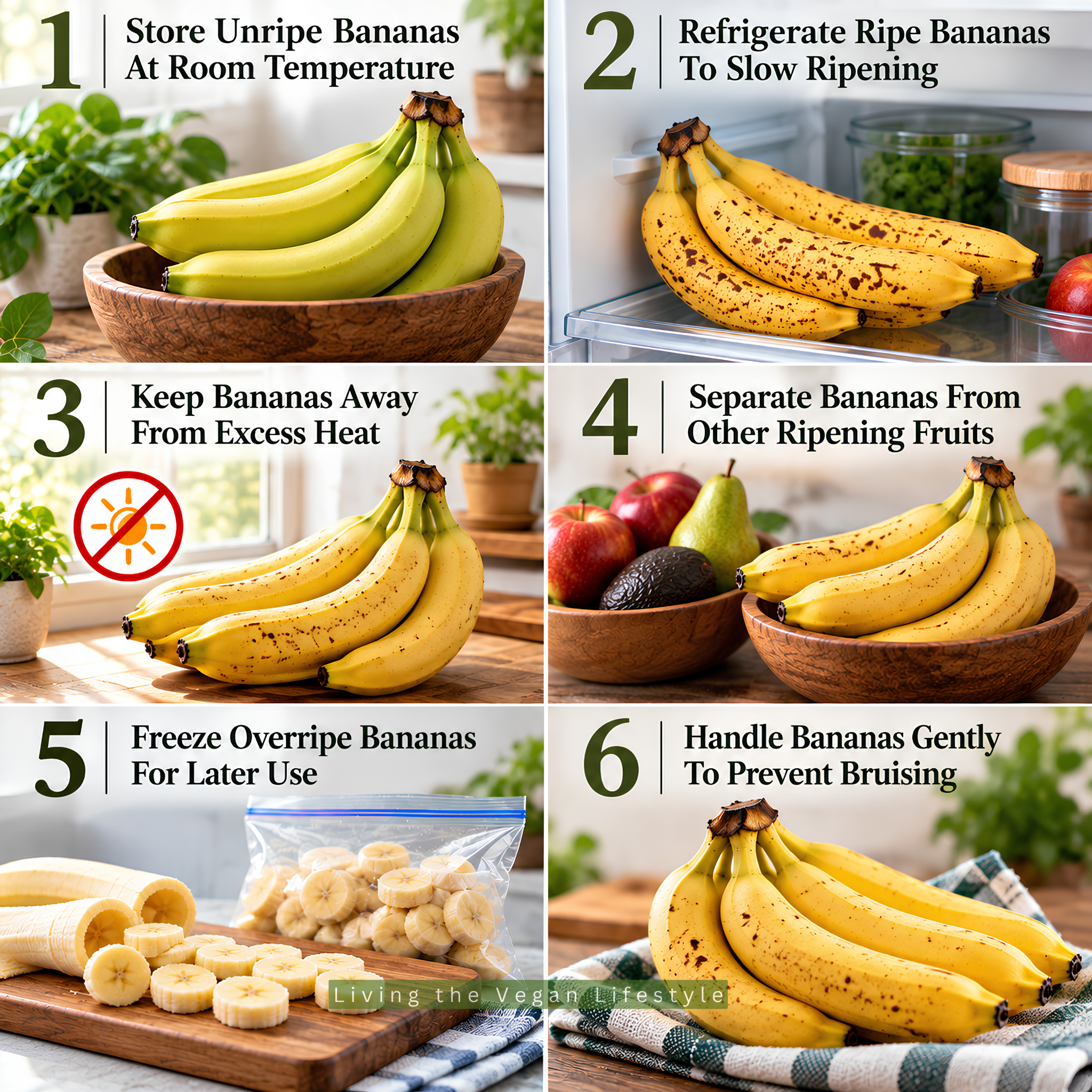
Keeping bananas fresh for longer is easier when you understand how temperature, ripeness, and storage conditions affect them. With a few simple habits, you can slow down ripening, preserve their natural flavour, and reduce unnecessary food waste.
Whether you prefer slightly firm bananas or fully ripe ones for baking, proper storage helps you enjoy them at their best. These six practical tips will help you make the most of every bunch.
1. Store Unripe Bananas At Room Temperature
Store unripe bananas at room temperature in a cool, dry area with good ventilation, away from direct sunlight. Excessive heat can accelerate ripening, causing the peel to develop brown spots sooner. A shaded kitchen counter or fruit bowl is usually a suitable choice.
Bananas naturally release ethylene gas, which helps them ripen. Check their colour and firmness daily to monitor their progress and decide when they are ready to eat.
Once bananas reach your preferred ripeness, you can refrigerate them to slow further softening and help preserve the fruit inside for longer. This simple habit is especially useful when you purchase several bananas at once.
2. Refrigerate Ripe Bananas To Slow Ripening
Refrigerating ripe bananas slows further ripening and helps preserve the fruit inside longer. Although the peel may turn dark brown or black, the flesh can remain perfectly edible. This colour change results partly from the peel’s sensitivity to cold temperatures.
If you cannot eat ripe bananas immediately, refrigerate them and check regularly for signs of spoilage. An unpleasant smell, visible mould, or leaking liquid may indicate deterioration.
Refrigeration generally suits ripe bananas better than green ones, which can suffer cold damage and develop an uneven texture. For the best flavour, allow green bananas to ripen naturally before placing them in the refrigerator.
3. Keep Bananas Away From Excess Heat
Warm temperatures can speed up banana ripening, especially during hot weather. To preserve freshness, keep bananas in a shaded, well-ventilated location away from sunny windows, ovens, and other heat sources.
This is especially useful in warm environments, where fruit can quickly become mushy on the counter. Check your bananas regularly, and refrigerate them once they reach your preferred ripeness.
If several bananas ripen at once, peel and freeze the extras for later use. They make wonderful additions to smoothies, pancakes, and homemade banana bread. Our simple vegan pancake recipes offer a delicious way to use ripe bananas.
These small storage habits help preserve banana quality while reducing unnecessary food waste in your kitchen.
4. Separate Bananas From Other Ripening Fruits
Bananas release ethylene, a natural plant hormone that promotes ripening. Other fruits, including apples, pears, and avocados, also produce ethylene, so storing them together may accelerate ripening under certain conditions.
To keep bananas firm longer, store them in a separate fruit bowl away from other ripening produce. This approach helps you manage ripening, although it cannot stop bananas from maturing naturally.
Check their colour and texture regularly, especially during warm weather. Separating fast-ripening fruits can also reduce food waste and keep your kitchen storage more organized.
If you want certain fruits to ripen faster, placing them near ripe bananas can sometimes help. However, keeping them apart is generally preferable when your goal is longer storage.
5. Freeze Overripe Bananas For Later Use
Freezing is a convenient way to preserve ripe bananas when you have more than you can eat. Peel the bananas, slice them into small pieces, and arrange the slices in a single layer on a freezer-safe tray.
Once frozen, transfer the pieces to a sealed container or freezer bag to save space and maintain quality. Label the container with the date so you can easily keep track of your frozen fruit.
Frozen bananas are excellent for smoothies, banana bread, pancakes, and creamy frozen desserts. Their texture becomes softer after thawing, so they work best in recipes rather than as fresh, whole fruit.
For more fruity inspiration, explore our vegan fruit sorbet recipes or discover delicious vegan baked fruit recipes. Both collections offer creative ways to enjoy fruit-based treats.
Bananas and coconut make a delicious tropical combination, especially in creamy, plant-based treats. Our collection of vegan coconut dessert recipes offers more inspiration for creating homemade desserts with these complementary flavours.
6. Handle Bananas Gently To Prevent Bruising
Gentle handling helps bananas maintain their appearance and quality as they ripen. Their soft flesh can bruise when you squeeze, drop, or press them under heavy items.
When shopping, choose bananas with firm peels and avoid placing heavy groceries on top of them during transport. At home, arrange the fruit in a single layer in a bowl or use a banana hanger to reduce pressure on individual fruits.
Check for bruises regularly, and use slightly damaged bananas promptly if the flesh remains fresh. Minor bruising doesn’t necessarily mean the fruit is spoiled, especially when the surrounding flesh looks and smells normal.
Handling bananas carefully helps reduce unnecessary waste and keeps them looking appealing longer. Even slightly bruised bananas can be useful for baking when they remain safe to eat.
Quick Tip: If your bananas are already ripe, refrigerate them for short-term storage or freeze peeled pieces for longer-term use. A dark peel alone does not necessarily mean the fruit has spoiled; check the flesh, smell, and texture before deciding whether to eat it.
Delicious Vegan Banana Recipes
Ripe bananas are wonderfully versatile in vegan cooking, adding natural sweetness, moisture, and a creamy texture to homemade treats. From comforting banana bread to delicious snacks and desserts, there are plenty of creative ways to enjoy this nutritious fruit.
Mashed ripe bananas also make an excellent egg substitute in many vegan baking recipes. About ¼ cup of mashed banana can replace one egg in muffins, pancakes, and quick breads, though results depend on the recipe.
Our Vegan Baking Cheat Sheet offers more helpful tips for adapting traditional recipes to plant-based baking, including alternatives to common animal-derived ingredients.
These delicious vegan banana recipes are perfect for using bananas that have become too ripe for your liking. Whether you’re preparing breakfast or baking something special for your family, these simple ideas make every banana count.
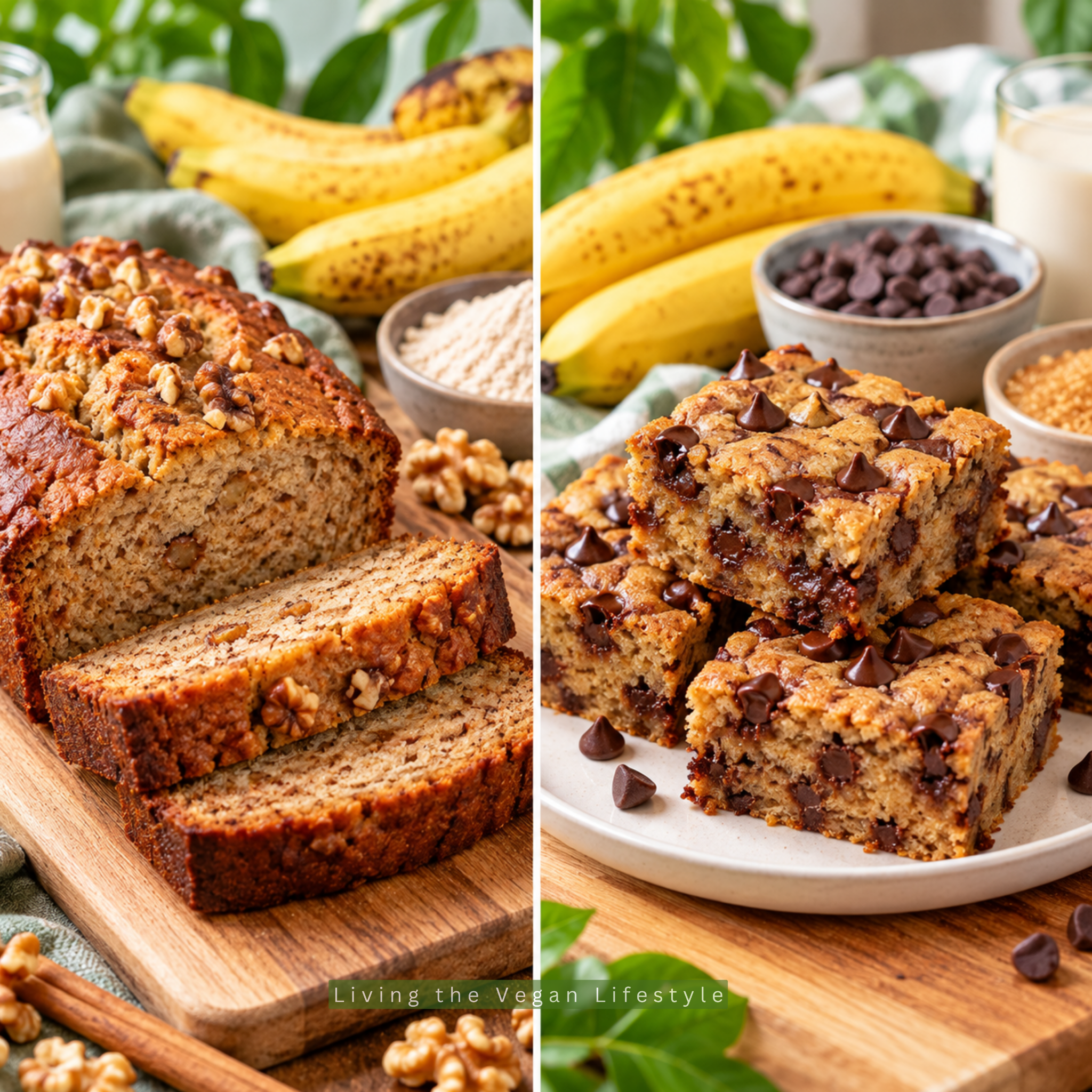
Recipe #1 — Healthy Vegan Banana Bread Recipe
This healthy vegan banana bread combines naturally sweet, ripe bananas with wholesome spelt flour for a soft, flavourful loaf. The mashed bananas also help bind the ingredients together, making eggs unnecessary in this delicious plant-based recipe.
It’s perfect for breakfast, an afternoon snack, or a homemade treat. Add chopped walnuts, plant-based chocolate chips, or a little cinnamon for extra crunch and flavour.
Prep Time: 10 minutes | Cook Time: 50–55 minutes | Total Time: 1 hour–1 hour 5 minutes | Servings: 8–10 slices
Dry Ingredients
- Spelt flour: 1¾ cups (210 g)
- Organic cane sugar: ⅓ cup (approximately 67 g)
- Baking powder: 1 teaspoon
- Baking soda: 1 teaspoon
- Sea salt: ¼ teaspoon, or to taste
Wet Ingredients
- Extra-ripe bananas: 3 large, mashed
- Avocado oil: ⅓ cup (approximately 79 ml)
- Vanilla extract: 1 teaspoon
- Unsweetened almond milk: ¼ cup (approximately 59 ml)
Optional Ingredients
- Walnuts: ½–⅔ cup, finely chopped
- Vegan chocolate chips: ¼–½ cup
- Ground cinnamon: 1 teaspoon
Method
- Preheat the oven to 350°F (177°C). Lightly oil a loaf pan or line it with parchment paper.
- Whisk together the spelt flour, baking powder, baking soda, cane sugar, and sea salt in a large mixing bowl.
- In a separate bowl, mash the ripe bananas until mostly smooth.
- Add the avocado oil, vanilla extract, and almond milk to the mashed bananas. Stir until well combined.
- Add the wet ingredients to the dry ingredients. Stir gently until just combined, avoiding overmixing.
- Fold in the walnuts, vegan chocolate chips, or cinnamon if using. If the batter seems unusually thick, add a small splash of almond milk.
- Bake for 50–55 minutes, or until a toothpick inserted into the centre comes out clean. A few moist crumbs are acceptable, but there should be no wet batter.
- Remove the banana bread from the oven and let it cool in the pan for about 10 minutes.
- Transfer the loaf to a wire rack and allow it to cool completely before slicing.
Storage Tips
Store the completely cooled banana bread in an airtight container at room temperature for up to two days. Refrigerate it for longer freshness, or freeze individual slices for convenient homemade snacks.
For the best texture, allow refrigerated slices to return to room temperature or warm them gently before serving.
2. Vegan Chocolate Chip Banana Squares Recipe
These vegan chocolate chip banana squares combine naturally sweet, ripe bananas, warm cinnamon, and rich chocolate chips in a soft, flavourful homemade treat. They’re perfect for lunchboxes, afternoon snacks, or a simple dessert the whole family can enjoy.
Ripe bananas provide natural sweetness and moisture, while the chocolate chips add a delicious finishing touch. With simple ingredients and minimal preparation, these banana squares are a wonderful way to use up overripe fruit.
Prep Time: 10 minutes | Cook Time: 15–20 minutes | Total Time: 25–30 minutes | Servings: 9 squares
Ingredients
- Ripe bananas: 1 cup, mashed (approximately 2 medium bananas, depending on size)
- Brown sugar: ⅓ cup
- Plant-based milk: 3 tablespoons
- Vanilla extract: ½ teaspoon
- All-purpose flour: ¾ cup
- Ground cinnamon: ¾ teaspoon
- Baking soda: ½ teaspoon
- Sea salt: ¼ teaspoon
- Vegan chocolate chips: ½ cup, divided
Method
- Preheat the oven to 350°F (177°C). Lightly grease an 8 × 8-inch square baking pan or line it with parchment paper.
- Mash the ripe bananas in a large mixing bowl until mostly smooth.
- Add the brown sugar, plant-based milk, and vanilla extract. Stir until thoroughly combined.
- In a separate bowl, whisk together the all-purpose flour, ground cinnamon, baking soda, and sea salt.
- Add the dry ingredients to the banana mixture. Stir gently until the flour is just incorporated, avoiding overmixing.
- Fold half of the vegan chocolate chips into the batter, distributing them evenly.
- Spread the batter evenly in the prepared baking pan. It should be fairly thick rather than runny.
- Sprinkle the remaining chocolate chips evenly over the surface.
- Bake for 15–20 minutes, or until the centre appears set and a toothpick comes out without wet batter. Avoid inserting it directly through melted chocolate chips.
- Remove the pan from the oven and allow the banana squares to cool for approximately 10–20 minutes.
- Cut into nine equal squares and carefully lift them from the pan.
- Serve warm or allow them to cool completely, depending on your preference.
Storage Tips
Allow the banana squares to cool completely before transferring them to an airtight container. Store them at room temperature for up to two days or refrigerate for approximately four days.
For longer storage, freeze individual squares in a freezer-safe container with parchment paper between layers. Thaw in the refrigerator or warm gently before serving.
Frequently Asked Questions
Q1: Is It Good To Eat A Banana Every Day?
Yes, most healthy adults can enjoy a banana every day as part of a balanced diet. Bananas provide fibre, potassium, vitamin B6, and natural carbohydrates that contribute to everyday nutrition.
However, individual nutritional needs vary depending on health conditions and dietary habits. People with certain kidney conditions may need to monitor their potassium intake.
Q2: Are Ripe Bananas Good For Digestion?
Ripe bananas contain dietary fibre, including pectin, which supports normal digestion and bowel function. Their soft texture also makes them comfortable for many people to eat.
As bananas ripen, some of their starch converts into simpler sugars, changing how they are digested. However, individual responses vary, and some people may experience bloating.
Q3: Are Ripe Bananas Good For Weight Loss?
Ripe bananas can fit into a balanced weight-management plan because they provide fibre, nutrients, and natural sweetness. They can also make a satisfying alternative to highly processed sweet snacks.
However, bananas do not directly burn fat or guarantee weight loss. Overall eating habits, appropriate portions, physical activity, and other lifestyle factors influence weight management.
Q4: Is It Better To Eat Bananas In The Morning Or At Night?
There is no universally best time to eat a banana, as its nutritional value remains largely the same throughout the day. Bananas are a convenient addition to breakfast, snacks, or evening meals.
Your preferred timing depends on your appetite, activity level, and daily routine. Maintaining a varied, balanced diet is generally more important than choosing a particular time.
Q5: Do Ripe Bananas Contain More Sugar Than Green Bananas?
Generally, yes. As bananas ripen, enzymes convert some of their starch into simpler sugars, making the fruit taste sweeter and giving it a softer texture.
Green bananas contain more resistant starch, while ripe bananas provide more readily available carbohydrates. Both can contribute to a balanced diet, depending on individual preferences and nutritional needs.
Q6: Can People With Diabetes Eat Ripe Bananas?
Many people with diabetes can enjoy ripe bananas as part of a balanced eating plan. However, portion size, ripeness, and what you eat alongside them can influence blood sugar responses.
Pairing a smaller banana portion with nuts or another source of protein and fat may help create a more balanced snack. Individual glucose responses vary, so personalized dietary guidance can be helpful.
Q7: Do Bananas Help Prevent Muscle Cramps?
Bananas provide potassium, an essential mineral that supports normal muscle and nerve function. Adequate potassium intake contributes to healthy muscle contractions and overall electrolyte balance.
However, eating bananas does not guarantee protection against muscle cramps. Dehydration, muscle fatigue, exercise intensity, and certain health conditions may also contribute to cramping.
Conclusion
The benefits of eating ripe bananas go beyond their naturally sweet flavour. These versatile fruits provide fibre, potassium, and essential vitamins while adding moisture and sweetness to delicious plant-based recipes.
From nutritious breakfast bowls to homemade banana bread and chocolate chip treats, ripe bananas offer countless possibilities. Enjoying them alongside a variety of wholesome foods can help make your everyday meals more balanced, satisfying, and enjoyable.
I trust you enjoyed this article on the Top Benefits of Eating Ripe Bananas. Please stay tuned for more delicious plant-based recipes, vegan travel tips, and lifestyle inspiration.
Take care!
— JeannetteZ 🌿
💬 Your Opinion Is Important To Me
Do you have thoughts, ideas, or questions? I’d love to hear from you. Please leave a comment below or email me directly at Jeannette@LivingTheVeganLifestyle.org.
📚 More Vegan Lifestyle Reads
⭐ My #1 Recommendation for Online Success
Sharing my passion for vegan living — from food to fashion — has been such a rewarding journey.
If you’ve ever dreamed of building your own ethical lifestyle brand or blog, this is the best place to start.
🚀 See How Vegan Bloggers Build Online Income — Try WA Free (No Credit Card Needed)
Disclosure
This post may contain affiliate links. As an Amazon Associate and participant in other affiliate programs, I earn from qualifying purchases at no extra cost to you. Please read my full affiliate disclosure.