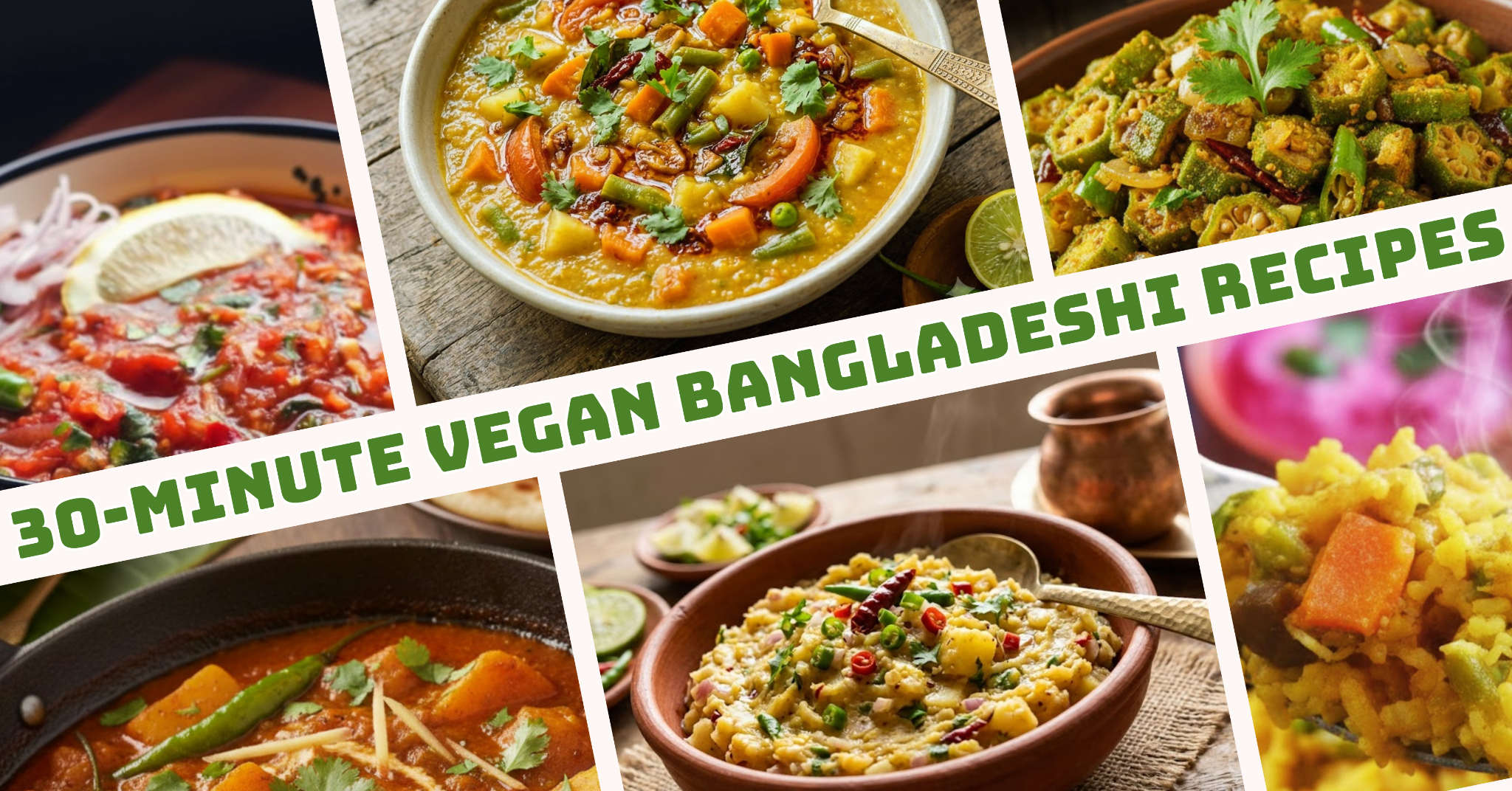
30-Minute Vegan Bangladeshi Recipes
These 30-Minute Vegan Bangladeshi Recipes are inspired by traditional family meals, making it easy to enjoy authentic flavours without spending hours in the kitchen.
Bangladeshi cuisine is deeply rooted in everyday home cooking, where meals are built around rice, comforting curries, lentils, and simple vegetable dishes.
When prepared vegan, these recipes remain rich in flavour and deeply satisfying, relying on aromatic spices, seasonal vegetables, and traditional cooking methods rather than complicated techniques.
This collection of 30-Minute Vegan Bangladeshi Recipes focuses on foods people actually prepare and enjoy at home. From lentil dishes and vegetable curries to bhorta and bhaji, each recipe reflects the balance and simplicity of traditional Bangladeshi cooking, served alongside rice.
The recipes in this collection are practical and approachable, using widely available ingredients while remaining true to their authentic roots.
Whether you're familiar with Bangladeshi cuisine or discovering it for the first time, these recipes offer a delicious introduction to comforting, home-cooked meals meant to be shared.
Together, they demonstrate how traditional Bangladeshi flavours can be enjoyed in a modern vegan lifestyle while preserving the character and heritage that make this cuisine so special.
Authentic 30-Minute Vegan Bangladeshi Recipes
Traditional Bangladeshi cooking is known for transforming simple ingredients into flavourful, satisfying meals. Fresh vegetables, lentils, fragrant spices, and rice form the foundation of many everyday dishes, creating recipes that are both nourishing and comforting.
This collection features authentic vegan Bangladeshi recipes that can be prepared in about 30 minutes. From hearty curries and bhorta to bhaji and lentil dishes, these recipes celebrate the rich culinary traditions of Bangladesh while fitting comfortably into today's busy lifestyle.
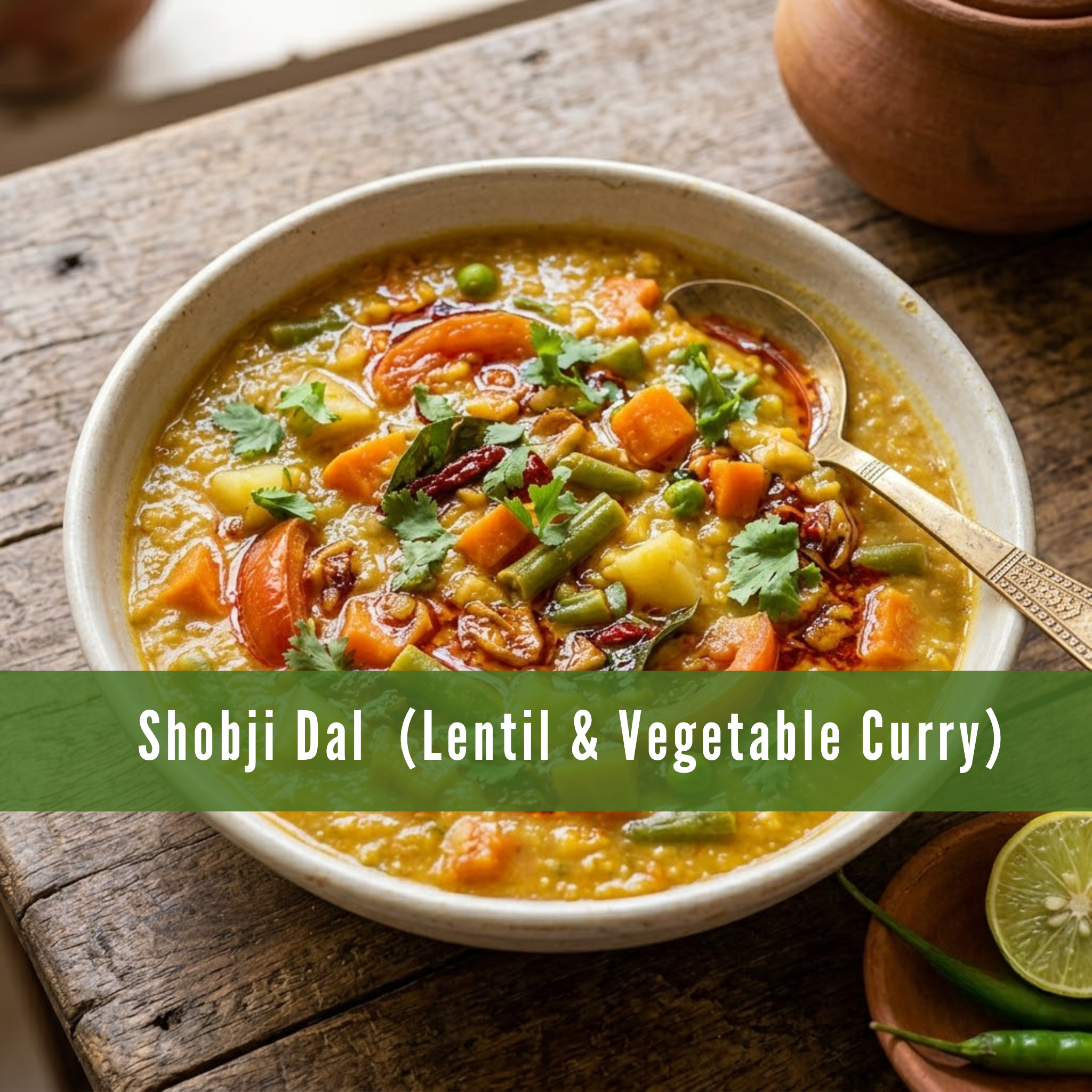
Recipe #1 — Shobji Dal (Bangladeshi Lentil & Vegetable Curry)
Shobji Dal is a comforting Bangladeshi lentil curry cooked with seasonal vegetables and gentle spices. It is a staple of everyday home cooking, typically served with steamed rice and simple vegetable dishes.
This dish is part of our 30-Minute Vegan Bangladeshi Recipes, offering a nourishing and practical introduction to traditional flavours prepared the way Bangladeshi families enjoy them at home.
Prep time: 10–15 minutes | Cook time: 20 minutes | Total time: 30–35 minutes | Servings: 4
Ingredients
- Red lentils (masoor dal): 1 cup, rinsed
- Water: 3½ cups
- Turmeric powder: ½ teaspoon
- Mustard oil: 1 tablespoon (or avocado oil if food-grade mustard oil is unavailable)
- Onion: 1 medium, finely chopped
- Garlic: 3 cloves, minced
- Ginger: 1-inch piece, finely grated
- Tomato: 1 medium, chopped
- Carrot: 1 small, diced
- Green beans: ½ cup, chopped
- Cumin seeds: ½ teaspoon
- Celtic sea salt to taste
Method
- Add the rinsed lentils, water, and turmeric to a pot. Bring to a gentle boil, then reduce the heat and simmer for 12–15 minutes until the lentils are soft.
- Meanwhile, heat the mustard oil (or avocado oil) in a separate pan over medium heat. If using mustard oil, heat it until it just begins to smoke lightly, then reduce the heat slightly before continuing.
- Add the cumin seeds and let them sizzle briefly until aromatic.
- Add the chopped onion and cook for 4–5 minutes until softened and lightly golden.
- Stir in the garlic and ginger and cook for 30–60 seconds until fragrant.
- Add the tomato, carrot, and green beans. Cook for 3–4 minutes until slightly softened.
- Transfer the vegetable mixture to the pot with the lentils and stir well.
- Simmer together for another 5–7 minutes, adjusting the consistency with a little water if needed.
- Season with Celtic sea salt to taste and serve hot with steamed rice.
Nutrition Facts (per serving)
- Calories: ≈240
- Protein: 13 g
- Fibre: 10 g
- Fat: 6 g
- Carbohydrates: 34 g
Health Benefits
Lentils are a nourishing source of plant-based protein and fibre, supporting digestion and steady energy throughout the day. Combined with seasonal vegetables, this dal provides essential vitamins, minerals, and antioxidants in a nourishing, balanced meal.
The use of turmeric, ginger, and cumin adds warmth and depth while traditionally supporting digestion and circulation. You can learn more about the nutritional value of lentils.
Explore more Bangladeshi-inspired vegan recipes.
Recipe #2 — Alu Bhorta (Mashed Potatoes with Mustard Oil & Chilli)
Alu Bhorta is one of the most beloved Bangladeshi side dishes, made with simply mashed potatoes, mustard oil, and chilli. It is traditionally served with rice alongside dal or vegetable curries, adding warmth and depth to everyday meals.
This dish is part of our 30-Minute Vegan Bangladeshi Recipes, highlighting how a few humble ingredients can create comfort and flavour when prepared with care.
Prep time: 10–15 minutes | Cook time: 15 minutes | Total time: 25–30 minutes | Servings: 4
Ingredients
- Potatoes: 4 medium, peeled and cut into chunks
- Mustard oil: 1½ tablespoons (or avocado oil if food-grade mustard oil is unavailable)
- Green chilli: 1 small, finely chopped
- Onion: 2 tablespoons, finely chopped
- Celtic sea salt to taste
Method
- Place the potatoes in a pot of salted water and bring to a boil.
- Cook for 12–15 minutes until the potatoes are very tender when pierced with a fork.
- Drain the potatoes thoroughly and transfer them to a mixing bowl.
- Mash the potatoes while still warm until mostly smooth, leaving a little texture.
- Add the mustard oil (or olive oil), chopped green chilli, and onion.
- Mix well until everything is evenly combined.
- Season with Celtic sea salt to taste and adjust the chilli if needed.
Nutrition Facts (per serving)
- Calories: ≈210
- Protein: 4 g
- Fibre: 4 g
- Fat: 7 g
- Carbohydrates: 34 g
Health Benefits
Potatoes provide complex carbohydrates that support steady energy, along with fibre and potassium that contribute to overall digestive and muscle function. When mashed simply, they remain easy to digest and satisfying.
Mustard oil adds a distinctive pungency and is traditionally used in Bangladeshi cooking to enhance flavour and warmth. Combined with fresh chilli, this bhorta brings balance and comfort to a rice-based meal. You can learn more about the culinary use of mustard oil.
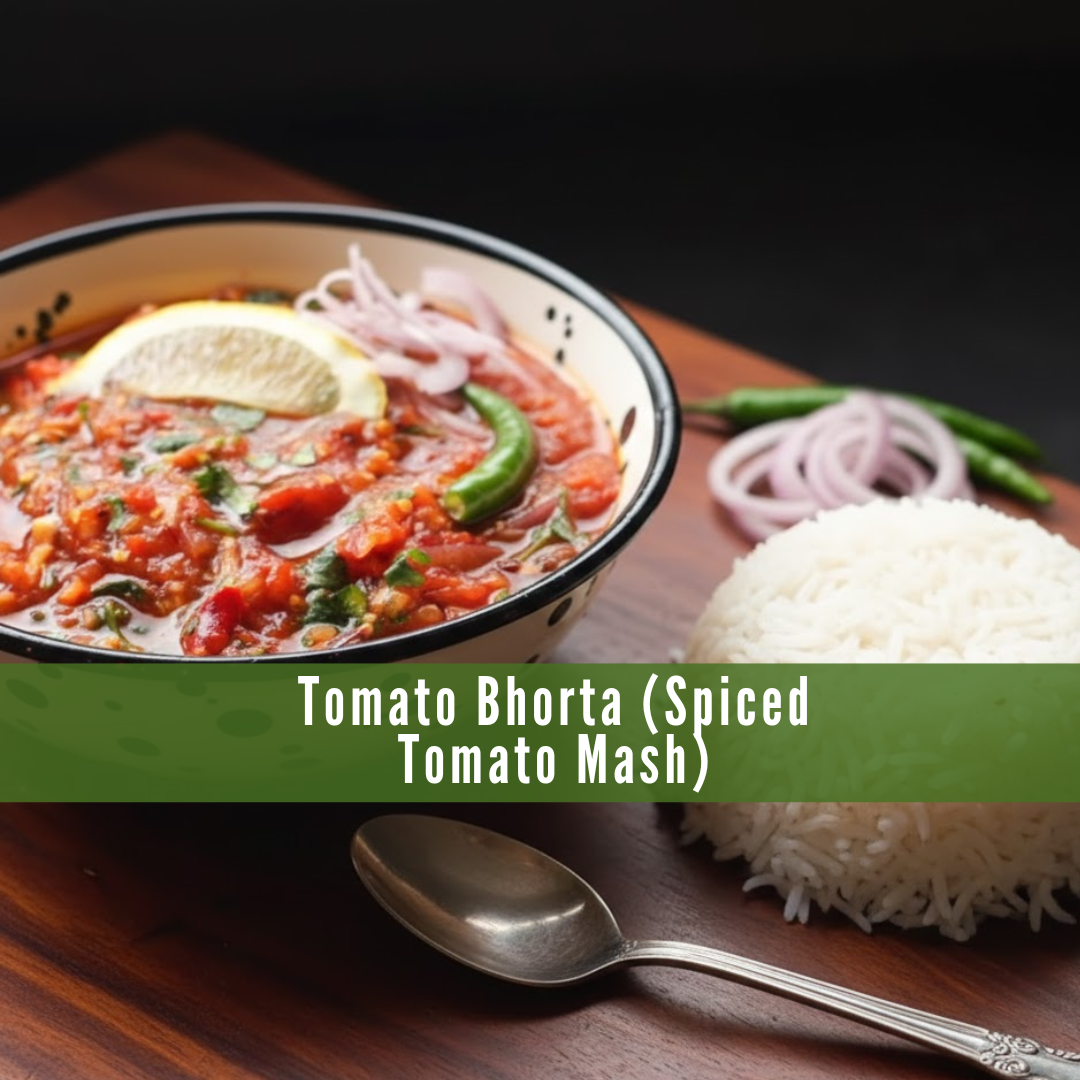
Recipe #3 — Tomato Bhorta (Spiced Tomato Mash)
Tomato Bhorta is a simple yet flavourful Bangladeshi side dish made from cooked tomatoes gently mashed with chilli and aromatics. It is commonly served with rice alongside dal or curry, adding brightness and balance to everyday meals.
This dish is part of our 30-Minute Vegan Bangladeshi Recipes, showing how fresh ingredients and minimal cooking can create deeply comforting flavours.
Prep time: 10–15 minutes | Cook time: 10–15 minutes | Total time: 20–30 minutes | Servings: 4
Ingredients
- Tomatoes: 4 medium, roughly chopped
- Mustard oil: 1 tablespoon (or avocado oil if food-grade mustard oil is unavailable)
- Garlic: 2 cloves, finely chopped
- Green chilli: 1 small, finely chopped
- Onion: 2 tablespoons, finely chopped
- Turmeric powder: ¼ teaspoon
- Celtic sea salt to taste
Method
- Heat the mustard oil (or avocado oil) in a separate pan over medium heat. If using mustard oil, heat it until it just begins to smoke lightly, then reduce the heat slightly before continuing.
- Add the garlic and cook for 30–45 seconds until fragrant.
- Add the chopped tomatoes, green chilli, onion, and turmeric.
- Cook for 8–10 minutes, stirring occasionally, until the tomatoes soften and release their juices.
- Remove from heat and allow the mixture to cool slightly.
- Mash gently with a spoon or fork until chunky but well combined.
- Season with Celtic sea salt to taste before serving.
Nutrition Facts (per serving)
- Calories: ≈95
- Protein: 2 g
- Fibre: 3 g
- Fat: 4 g
- Carbohydrates: 12 g
Health Benefits
Tomatoes are rich in antioxidants and vitamin C, supporting overall well-being while adding natural acidity and freshness to meals. Light cooking helps soften their texture and enhance flavour without overwhelming the dish.
The addition of garlic and chilli provides warmth and depth while traditionally supporting digestion and circulation. You can learn more about the nutritional profile of tomatoes.
Recipe #4 — Cholar Dal (Split Chickpea Lentil Curry)
Cholar Dal is a traditional Bangladeshi lentil curry made with split chickpeas simmered in warm spices. It is commonly served with rice and vegetable sides, forming an essential part of everyday family meals.
This dish is part of our 30-Minute Vegan Bangladeshi Recipes, offering a hearty and satisfying curry that fits naturally into home-style plant-based cooking.
Prep time: 10–15 minutes | Cook time: 20 minutes | Total time: 30–35 minutes | Servings: 4
Ingredients
- Chana dal (split chickpeas): 1 cup, rinsed
- Water: 4 cups
- Turmeric powder: ½ teaspoon
- Mustard oil: 1 tablespoon (or avocado oil if food-grade mustard oil is unavailable)
- Bay leaf: 1
- Onion: 1 medium, finely sliced
- Garlic: 3 cloves, minced
- Ginger: 1-inch piece, finely grated
- Cumin powder: ½ teaspoon
- Coriander powder: ½ teaspoon
- Celtic sea salt to taste
Method
- Add the rinsed chana dal, water, and turmeric to a pot. Bring to a boil, then reduce heat and simmer for 18–20 minutes until the lentils are tender but not mushy.
- While the dal cooks, heat the mustard oil (or avocado oil) in a separate pan over medium heat. If using mustard oil, heat it until it just begins to smoke lightly, then reduce the heat slightly before continuing.
- Add the bay leaf and sliced onion and cook for 4–5 minutes until the onion softens and lightly browns.
- Stir in the garlic and ginger and cook for 30–60 seconds until fragrant.
- Add the cumin and coriander powders and stir for 30 seconds to bloom the spices.
- Transfer the onion and spice mixture into the cooked dal and stir well.
- Simmer together for another 5 minutes, adjusting thickness with water if needed.
- Season with Celtic sea salt to taste and remove the bay leaf before serving.
Nutrition Facts (per serving)
- Calories: ≈260
- Protein: 14 g
- Fibre: 9 g
- Fat: 6 g
- Carbohydrates: 38 g
Health Benefits
Chana dal is a rich source of plant-based protein and dietary fibre, helping support digestion and steady energy levels. Its hearty texture makes this curry both filling and nourishing, especially when served with rice.
The use of warming spices such as ginger, cumin, and coriander adds depth of flavour while traditionally supporting digestion. You can learn more about the nutritional value of chana dal.
Want to Share Your Passion for Vegan Living?
Discover how easy and fulfilling vegan living can be —
from recipes and travel to lifestyle and sustainability tips.
Read this blog post next:
How to Start a Vegan Blog (and Turn Your Passion into Purpose).
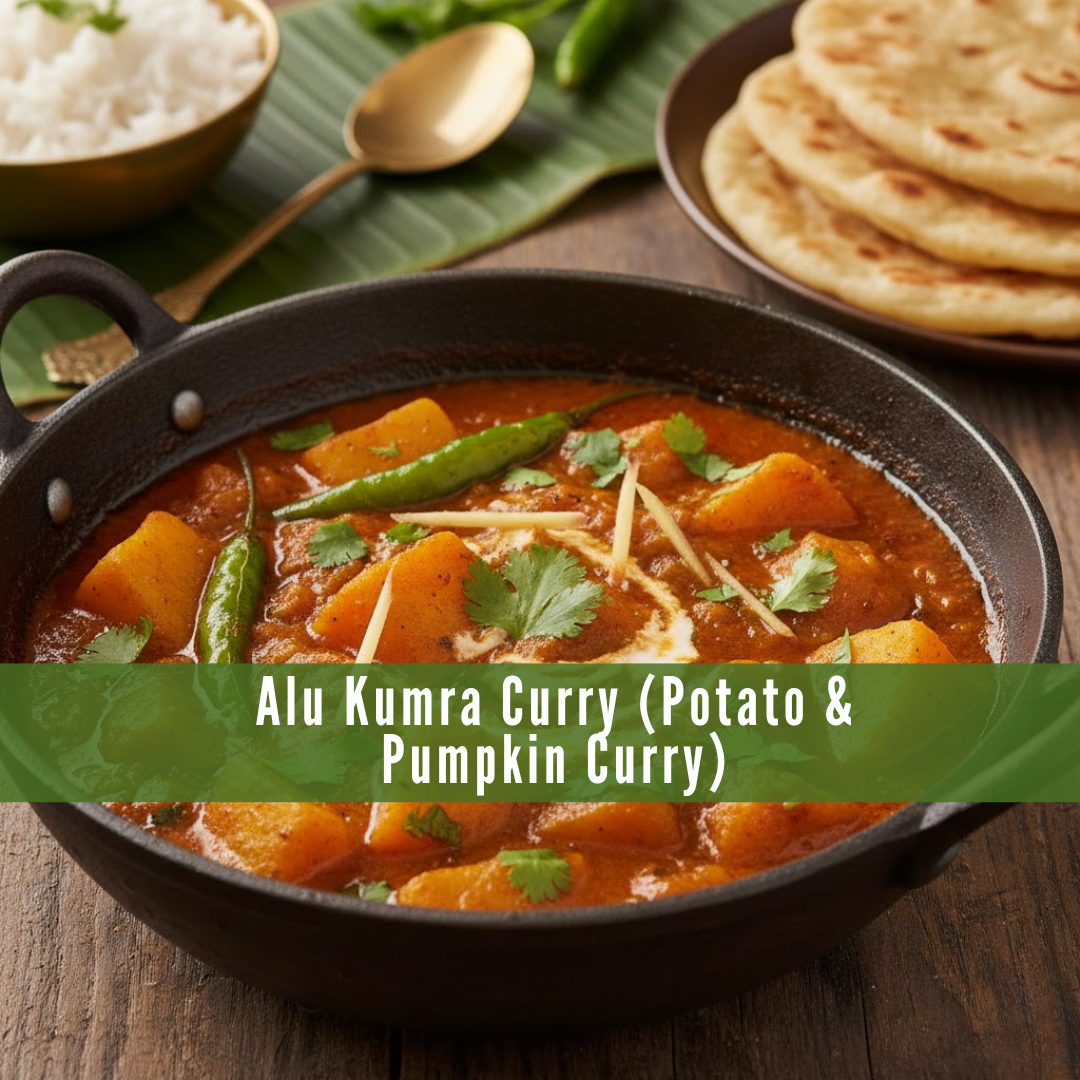
Recipe #5 — Alu Kumra Curry (Potato & Pumpkin Curry)
Alu Kumra Curry is a comforting Bangladeshi vegetable curry made with potatoes and pumpkin simmered in gentle spices. It is a familiar everyday dish, commonly served with rice and simple sides such as bhorta or bhaji.
This curry is part of our 30-Minute Vegan Bangladeshi Recipes, highlighting how seasonal vegetables and simple techniques come together to create deeply satisfying meals.
Prep time: 10–15 minutes | Cook time: 20 minutes | Total time: 30–35 minutes | Servings: 4
Ingredients
- Potatoes: 2 medium, peeled and cut into chunks
- Pumpkin: 2 cups, peeled and cubed
- Mustard oil: 1½ tablespoons (or avocado oil if food-grade mustard oil is unavailable)
- Onion: 1 medium, finely chopped
- Garlic: 3 cloves, minced
- Ginger: 1-inch piece, finely grated
- Turmeric powder: ½ teaspoon
- Cumin powder: ½ teaspoon
- Coriander powder: ½ teaspoon
- Water: 1½ cups
- Celtic sea salt to taste
Method
- Heat the mustard (oil or avocado oil) in a separate pan over medium heat. If using mustard oil, heat it until it just begins to smoke lightly, then reduce the heat slightly before continuing.
- Add the chopped onion and cook for 4–5 minutes until soft and lightly golden.
- Stir in the garlic and ginger and cook for 30–60 seconds until fragrant.
- Add the turmeric, cumin, and coriander powders and stir briefly to bloom the spices.
- Add the potatoes and pumpkin, stirring to coat them evenly with the spice mixture.
- Pour in the water, cover, and bring to a gentle simmer.
- Cook for 15–18 minutes, stirring occasionally, until the vegetables are tender and the curry thickens slightly.
- Season with Celtic sea salt to taste, then remove from the heat.
Nutrition Facts (per serving)
- Calories: ≈230
- Protein: 4 g
- Fibre: 6 g
- Fat: 7 g
- Carbohydrates: 36 g
Health Benefits
Potatoes and pumpkin provide complex carbohydrates and fibre, supporting steady energy and digestion. Pumpkin also contributes beta-carotene and other antioxidants, making this curry both nourishing and naturally comforting.
The gentle use of turmeric, ginger, and cumin adds warmth while traditionally supporting digestion. You can learn more about the nutritional profile of pumpkins.
Recipe #6 — Begun Alu Curry (Eggplant & Potato Curry)
Begun Alu Curry is a classic Bangladeshi vegetable curry made with eggplant and potatoes gently simmered in warm spices. It is a comforting everyday dish, often served with rice and simple vegetable sides.
This curry is part of our 30-Minute Vegan Bangladeshi Recipes, showing how familiar vegetables can become deeply satisfying, home-style meals.
Prep time: 10–15 minutes | Cook time: 20 minutes | Total time: 30–35 minutes | Servings: 4
Ingredients
- Eggplant: 1 medium, cut into bite-sized pieces
- Potatoes: 2 medium, peeled and cut into chunks
- Mustard oil: 1 tablespoon (or avocado oil if food-grade mustard oil is unavailable)
- Onion: 1 medium, finely chopped
- Garlic: 3 cloves, minced
- Ginger: 1-inch piece, finely grated
- Turmeric powder: ½ teaspoon
- Cumin powder: ½ teaspoon
- Coriander powder: ½ teaspoon
- Water: 1½ cups
- Celtic sea salt to taste
Method
- Heat the mustard (oil or avocado oil) in a separate pan over medium heat. If using mustard oil, heat it until it just begins to smoke lightly, then reduce the heat slightly before continuing.
- Add the chopped onion and cook for 4–5 minutes until soft and lightly golden.
- Stir in the garlic and ginger and cook for 30–60 seconds until fragrant.
- Add the turmeric, cumin, and coriander powders and stir briefly to bloom the spices.
- Add the potatoes and eggplant, stirring to coat them evenly with the spice mixture.
- Pour in the water, cover, and bring to a gentle simmer.
- Cook for 15–18 minutes, stirring occasionally, until the vegetables are tender and the curry thickens slightly.
- Season with Celtic sea salt to taste, then remove from the heat.
Nutrition Facts (per serving)
- Calories: ≈220
- Protein: 4 g
- Fibre: 7 g
- Fat: 7 g
- Carbohydrates: 34 g
Health Benefits
Eggplant and potatoes provide fibre and complex carbohydrates, helping support digestion and steady energy. Eggplant also contains antioxidants that contribute to overall well-being.
Ginger, turmeric, and cumin add warmth and depth while traditionally supporting digestive comfort. You can learn more about the nutritional qualities of eggplant.
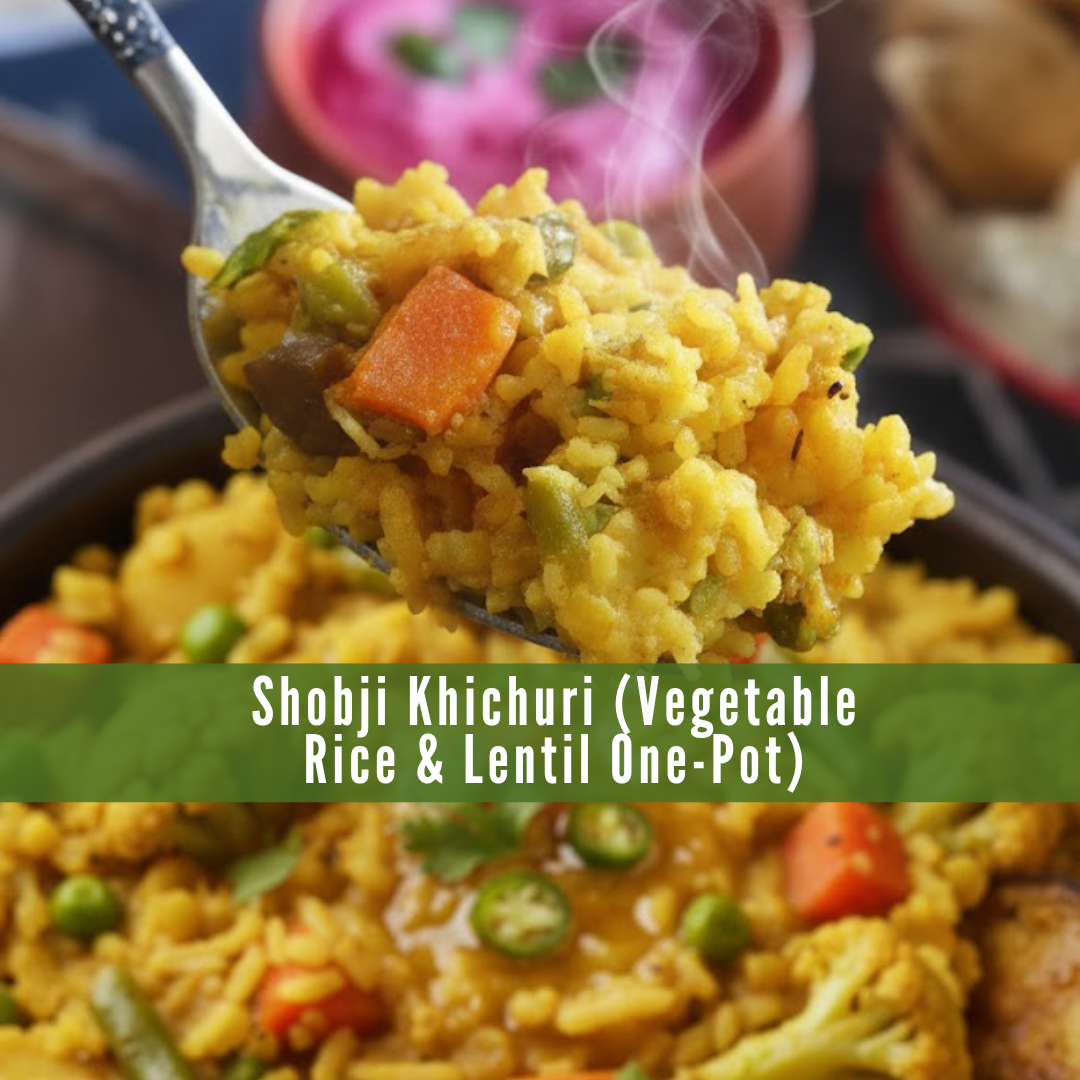
Recipe #7 — Shobji Khichuri (Vegetable Rice & Lentil One-Pot)
Shobji Khichuri is a comforting Bangladeshi one-pot dish made with rice, lentils, and vegetables gently cooked together with warming spices. It is often prepared as a complete meal, especially on cooler days or when you want something simple and nourishing.
This dish is part of our 30-Minute Vegan Bangladeshi Recipes, showing how rice and lentils can come together in a balanced, satisfying meal that feels both familiar and restorative.
Prep time: 10–15 minutes | Cook time: 20 minutes | Total time: 30–35 minutes | Servings: 4
Ingredients
- White rice: ¾ cup, rinsed
- Red lentils (masoor dal): ½ cup, rinsed
- Mustard oil: 1½ tablespoons (or avocado oil if food-grade mustard oil is unavailable)
- Onion: 1 medium, finely sliced
- Garlic: 3 cloves, minced
- Ginger: 1-inch piece, finely grated
- Turmeric powder: ½ teaspoon
- Cumin powder: ½ teaspoon
- Carrot: 1 medium, diced
- Potato: 1 medium, diced
- Green beans: ½ cup, chopped
- Water: 4 cups
- Celtic sea salt to taste
Method
- Heat the mustard (oil or avocado oil) in a separate pan over medium heat. If using mustard oil, heat it until it just begins to smoke lightly, then reduce the heat slightly before continuing.
- Add the sliced onion and cook for 4–5 minutes until soft and lightly golden.
- Stir in the garlic and ginger and cook for 30–60 seconds until fragrant.
- Add the turmeric and cumin powders and stir briefly to bloom the spices.
- Add the diced carrot, potato, and green beans, stirring to coat them evenly.
- Stir in the rinsed rice and lentils.
- Pour in the water and bring to a gentle boil.
- Reduce the heat, cover, and simmer for 18–20 minutes, stirring once or twice, until the rice and lentils are soft and the mixture becomes creamy.
- Season with Celtic sea salt to taste and allow to rest for a few minutes before serving.
Nutrition Facts (per serving)
- Calories: ≈310
- Protein: 10 g
- Fibre: 8 g
- Fat: 7 g
- Carbohydrates: 52 g
Health Benefits
This dish combines rice and lentils to provide a balanced source of carbohydrates, plant-based protein, and fibre, helping support steady energy and satiety. The vegetables add vitamins and minerals that make the meal both nourishing and gentle.
Traditionally enjoyed for its comforting nature, shobji khichuri is easy to digest and well-suited to everyday meals. You can learn more about the nutritional role of khichuri in South Asian cuisine.
Recipe #8 — Bandhakopi Bhaji (Spiced Cabbage Stir-Fry)
Bandhakopi Bhaji is a simple Bangladeshi cabbage stir-fry cooked with gentle spices and aromatics. It is commonly served as a vegetable side alongside rice and curry, adding texture and balance to everyday meals.
This bhaji is part of our 30-Minute Vegan Bangladeshi Recipes, showing how you can prepare humble vegetables quickly while still delivering comfort and flavour.
Prep time: 10–15 minutes | Cook time: 15 minutes | Total time: 25–30 minutes | Servings: 4
Ingredients
- Green cabbage: 3 cups, finely shredded
- Mustard oil: 1 tablespoon (or avocado oil if food-grade mustard oil is unavailable)
- Onion: 1 small, finely sliced
- Garlic: 2 cloves, minced
- Turmeric powder: ¼ teaspoon
- Cumin seeds: ½ teaspoon
- Green chilli: 1 small, finely chopped
- Celtic sea salt to taste
Method
- Heat the mustard oil or avocado oil in a separate pan over medium heat. If using mustard oil, heat it until it just begins to smoke lightly, then reduce the heat slightly before continuing.
- Add the cumin seeds and allow them to sizzle briefly until aromatic.
- Add the sliced onion and cook for 3–4 minutes until softened.
- Stir in the garlic and green chilli and cook for 30–60 seconds.
- Add the shredded cabbage and turmeric powder, stirring well to combine.
- Cook for 10–12 minutes, stirring occasionally, until the cabbage softens but still retains some texture.
- Season with Celtic sea salt to taste and remove from heat.
Nutrition Facts (per serving)
- Calories: ≈120
- Protein: 3 g
- Fibre: 4 g
- Fat: 5 g
- Carbohydrates: 14 g
Health Benefits
Cabbage is a fibre-rich vegetable that supports digestion while providing vitamin C and antioxidants. Light cooking helps soften its texture while preserving its natural nutrients.
Cumin, garlic, and chilli add warmth and flavour while traditionally supporting digestion. You can learn more about the nutritional benefits of cabbage.
Explore more Bangladeshi-inspired vegan recipes.
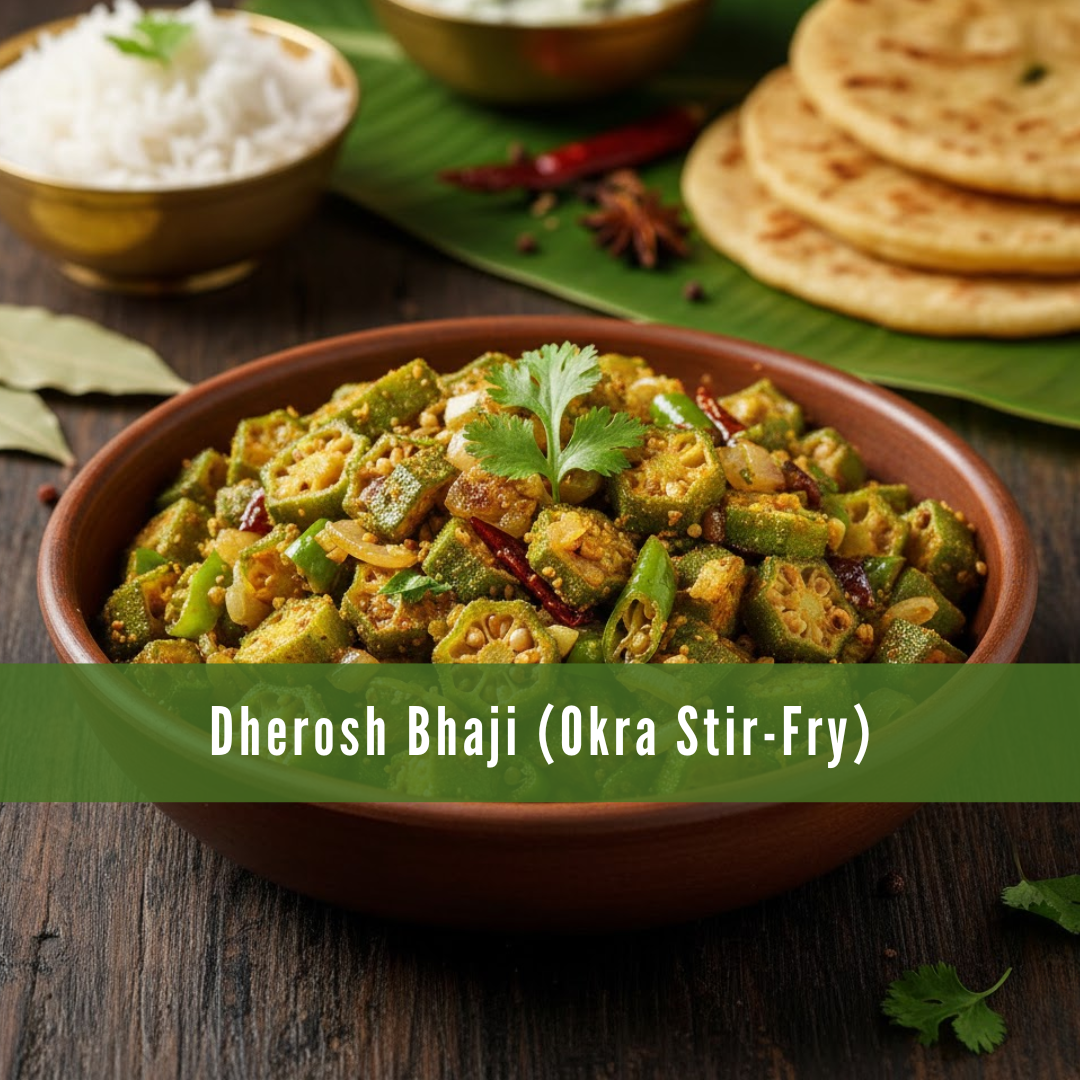
Recipe #9 — Dherosh Bhaji (Okra Stir-Fry)
Dherosh Bhaji is a simple Bangladeshi okra stir-fry cooked with gentle spices and aromatics. It is commonly served as a vegetable side with rice and curry, adding texture and earthy flavour to everyday meals.
This bhaji is part of our 30-Minute Vegan Bangladeshi Recipes, showing how a single vegetable can be prepared quickly while still feeling nourishing and satisfying.
Prep time: 10–15 minutes | Cook time: 15 minutes | Total time: 25–30 minutes | Servings: 4
Ingredients
- Okra: 3 cups, sliced into rounds
- Mustard oil: 1 tablespoon (or avocado oil if food-grade mustard oil is unavailable)
- Onion: 1 small, finely sliced
- Garlic: 2 cloves, minced
- Turmeric powder: ¼ teaspoon
- Cumin powder: ¼ teaspoon
- Green chilli: 1 small, finely chopped
- Celtic sea salt to taste
Method
- Wash the okra and pat it completely dry before slicing. This helps reduce stickiness while cooking.
- Heat the mustard oil or avocado oil in a separate pan over medium heat. If using mustard oil, heat it until it just begins to smoke lightly, then reduce the heat slightly before continuing.
- Add the sliced onion and cook for 3–4 minutes until softened.
- Stir in the garlic and green chilli and cook for 30–60 seconds until fragrant.
- Add the sliced okra, turmeric powder, and cumin powder, stirring gently to coat.
- Cook uncovered for 10–12 minutes, stirring occasionally, until the okra is tender and lightly crisp.
- Season with Celtic sea salt to taste and remove from heat.
Nutrition Facts (per serving)
- Calories: ≈130
- Protein: 3 g
- Fibre: 4 g
- Fat: 5 g
- Carbohydrates: 16 g
Health Benefits
Okra is a fibre-rich vegetable that supports digestion and contributes to gut health. Its natural mucilage can help create a gentle, soothing effect on the digestive system.
Light cooking preserves okra’s nutrients while enhancing flavour and texture. You can learn more about the nutritional profile of okra.
Recipe #10 — Kumra Bhaji (Pumpkin Stir-Fry)
Kumra Bhaji is a simple Bangladeshi pumpkin stir-fry cooked with gentle spices and minimal ingredients. It is commonly served as a vegetable side alongside rice and curry, adding natural sweetness and softness to everyday meals.
This bhaji is part of our 30-Minute Vegan Bangladeshi Recipes, highlighting how seasonal vegetables are often prepared simply and enjoyed as part of a balanced home-cooked plate.
Prep time: 10–15 minutes | Cook time: 15 minutes | Total time: 25–30 minutes | Servings: 4
Ingredients
- Pumpkin: 3 cups, peeled and cut into small cubes
- Mustard oil: 1 tablespoon (or avocado oil if food-grade mustard oil is unavailable)
- Onion: 1 small, finely sliced
- Garlic: 2 cloves, minced
- Turmeric powder: ¼ teaspoon
- Cumin powder: ¼ teaspoon
- Green chilli: 1 small, finely chopped
- Celtic sea salt to taste
Method
- Heat the mustard (oil or avocado oil) in a separate pan over medium heat. If using mustard oil, heat it until it just begins to smoke lightly, then reduce the heat slightly before continuing.
- Add the sliced onion and cook for 3–4 minutes until softened.
- Stir in the garlic and green chilli, then cook for 30–60 seconds, until fragrant.
- Add the pumpkin cubes, turmeric powder, and cumin powder, stirring to coat evenly.
- Cover the pan and cook for 10–12 minutes, stirring once or twice, until the pumpkin is tender.
- Uncover and cook for another 2–3 minutes to allow excess moisture to evaporate.
- Season with Celtic sea salt to taste and remove from heat.
Nutrition Facts (per serving)
- Calories: ≈140
- Protein: 2 g
- Fibre: 4 g
- Fat: 5 g
- Carbohydrates: 20 g
Health Benefits
Pumpkin is naturally rich in fibre and beta-carotene, supporting digestion and overall wellbeing. Its gentle sweetness makes it easy to enjoy as part of a balanced meal without heavy seasoning.
Lightly spiced pumpkin dishes are traditionally valued for their comforting and grounding qualities. You can learn more about the nutritional benefits of pumpkin.
Explore more Bangladeshi-inspired vegan recipes.
Conclusion
Cooking Bangladeshi food at home doesn’t have to be complicated — it can be a comforting, grounding part of everyday life.
These 30-Minute Vegan Bangladeshi Recipes reflect the warmth of family meals built around rice, lentils, vegetables, and simple spices that come together with ease.
Each recipe in this collection is rooted in familiar home cooking, from nourishing dals and vegetable curries to bhorta and bhaji served alongside rice.
They are meant to be practical, approachable, and deeply satisfying — food that supports daily routines rather than demanding extra time or effort. Plant-based eating is about more than ingredients; it is about care, balance, and nourishment.
By keeping preparation simple and flavours authentic, these dishes show how traditional Bangladeshi meals can fit naturally into a modern vegan lifestyle.
I trust you enjoyed this collection of 30-Minute Vegan Bangladeshi Recipes. Please stay tuned for more plant-based recipes, cultural food guides, and everyday vegan inspiration.
Take care!
— JeannetteZ 🌿
💬 Your Opinion Is Important To Me
Do you have thoughts, ideas, or questions? I’d love to hear from you. Please leave your comments below or email me directly at Jeannette@LivingTheVeganLifestyle.org.
📚 More Vegan Lifestyle Reads
⭐ My #1 Recommendation for Online Success
Sharing my passion for vegan living — from food to fashion — has been such a rewarding journey.
If you’ve ever dreamed of building your own ethical lifestyle brand or blog, this is the best place to start.
🚀 See How Vegan Bloggers Build Online Income — Try WA Free (No Credit Card Needed)
Disclosure
This post may contain affiliate links. As an Amazon Associate and participant in other affiliate programs, I earn from qualifying purchases at no extra cost to you. Please read my full affiliate disclosure.